
niche perfumes
extrait de parfum vs eau de parfum, what really changes
Nov
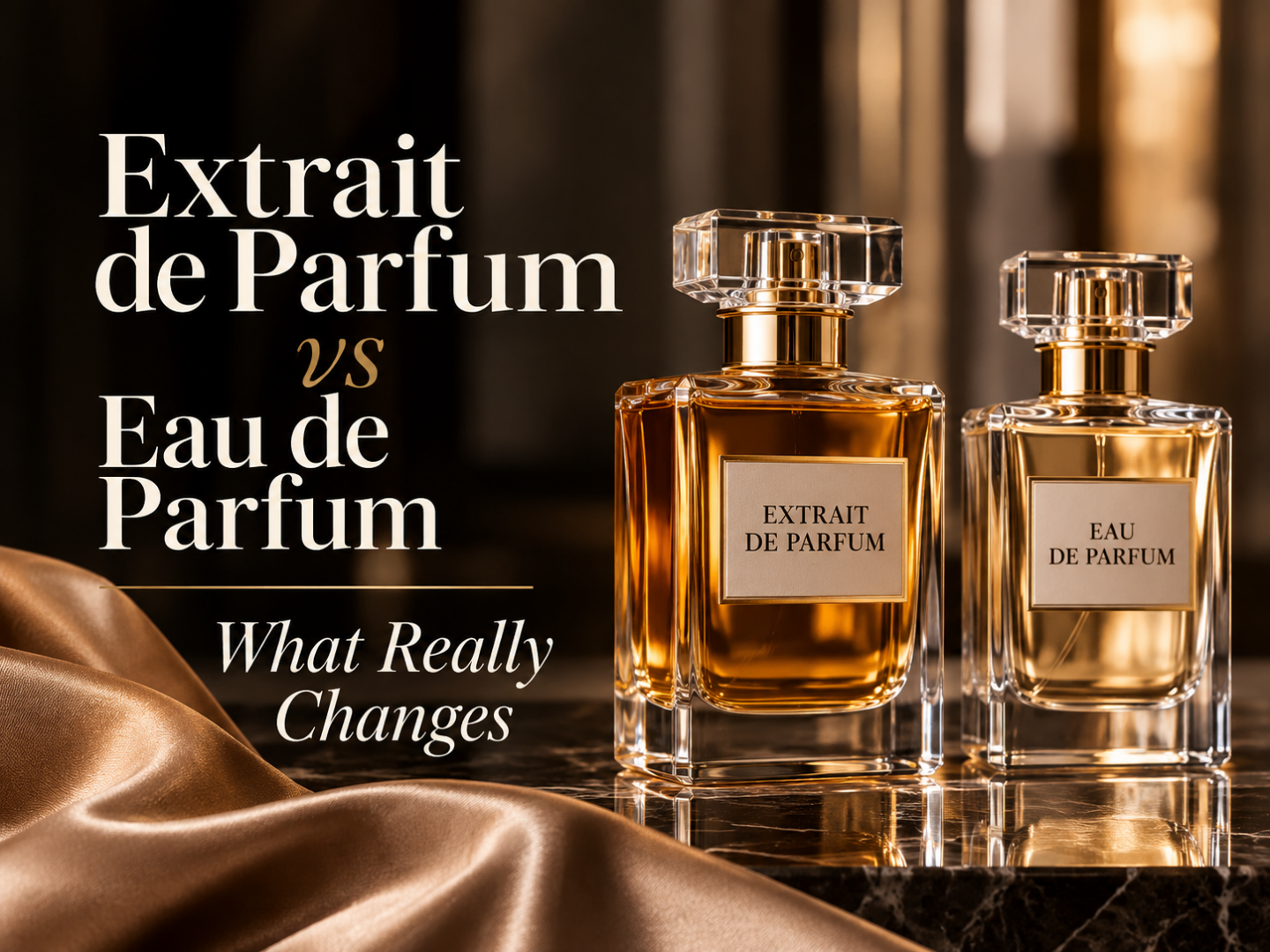
Extrait de parfum has more fragrance oil than eau de parfum, usually somewhere between 20 and 30 percent or more, against about 15 to 20 percent for an eau de parfum. In practice that often means a richer scent that stays close to the skin, lasts longer, needs fewer sprays, and costs more. The catch is that the name on the box is a habit, not a strict rule, so the real percentage tells you more than the label.
What “concentration” actually means
A perfume is a blend of fragrance oil and alcohol, with a little water. The concentration is simply the share of oil. More oil means more of the actual scent in every spray, and less alcohol carrying it.
That one number is behind most of the differences people talk about when they compare extrait de parfum vs eau de parfum. Let’s go through what it really changes.
The usual ranges
| Type | Typical share of fragrance oil |
| Eau de cologne | about 2 to 5 percent |
| Eau de toilette | about 5 to 15 percent |
| Eau de parfum | about 15 to 20 percent |
| Extrait de parfum (also called parfum) | about 20 to 30 percent or more |
These are the figures most houses and retailers quote. They are conventions, not laws, so one brand’s eau de parfum can be richer than another brand’s extrait. That is why the percentage matters more than the word on the bottle.
What changes when you wear it
Longevity. More oil usually means the scent hangs around longer, but not automatically. A well-built formula with good base materials will outlast a clumsy one with a bigger number. If you want to dig into this, we wrote about it in do niche fragrances last longer.
Closeness. Rich concentrations often feel denser and sit nearer to the skin, almost like a second layer. Lighter ones tend to throw more of a cloud around you. Neither is better, it depends on whether you want to be noticed from across the room or only when someone leans in.
The opening. Alcohol is what lifts the first notes into the air. With less alcohol, the first few minutes can feel softer and more direct, and the scent often reaches its heart quicker.
How much you spray. This one surprises people. A richer perfume usually needs fewer sprays. Two is often plenty, and more can feel heavy, especially in cooler weather.
Does more oil always mean better?
No. A beautifully made eau de parfum will beat a poorly balanced extrait every time. Quality comes from the materials, the structure and how the scent develops on your skin, not only from the percentage.
Your skin matters too. Dry skin drinks perfume faster, so the same fragrance can last six hours on one person and three on another. Moisturising before you spray makes a real difference, and our perfume tips for long-lasting scents go through the habits that help.
Why extrait costs more
More oil means more raw material per milliliter, and good raw materials are the expensive part of a perfume. So a higher concentration usually comes with a higher price. In return you spray less, so a bottle lasts longer than you would expect. If you are weighing it up, read are niche perfumes worth the price for a realistic cost breakdown.
Where Solos Perfumes fits
Here is something we think is worth being plain about. Our four fragrances, Resilience, Perseverance, Audacity and Renaissance, are labelled eau de parfum and are made at 25 percent.
That is above the usual eau de parfum range and inside the range many houses use for extrait. The label says eau de parfum, and the number says 25 percent. When you compare perfumes, look at the number as well as the name.
Extrait de parfum vs eau de parfum, which one should you choose?
Choose an extrait, or a very rich eau de parfum, if you like a scent that stays close and personal, if you want to spray less, or if you are buying for evenings and cold weather. It also suits people who find lighter perfumes disappear too fast.
Choose a lighter eau de parfum if you want more presence in the air, if you like a fresher opening, or if you wear perfume mostly in the heat.
A concentration in the middle, like 25 percent, tends to give you both. It stays intimate on the skin without disappearing by lunch.
How to wear a rich concentration
Start with one or two sprays on the wrists and the base of the neck, and give it a few minutes before deciding you need more. Don’t rub your wrists together, since it can flatten the opening. Spray on moisturized skin, and keep the bottle somewhere cool and dark, as we explain in how to store your perfumes.
If you are not sure what you like yet, try before you buy. The Solos Perfumes sample set is €9 and lets you see how a rich concentration behaves on your own skin.
Frequently asked questions
Is extrait de parfum stronger than eau de parfum?
It has more fragrance oil, so it is more concentrated. That does not always mean it projects more. Many extraits sit closer to the skin.
Does extrait de parfum last longer?
Usually, yes, but not always. Longevity depends on the formula, the materials and your skin as well as the concentration.
Is parfum the same as extrait de parfum?
Yes. Parfum, pure perfume, and extrait de parfum are different names for the most concentrated type.
Is a higher concentration better for sensitive skin?
Not necessarily. More oil means more fragrance materials on the skin. If you are sensitive, read about common perfume allergens and test a small amount first.
What concentration are Solos Perfumes fragrances?All four fragrances in the Essence of Virtue collection are eau de parfum made at 25 percent.
The bottom line
When you compare extrait de parfum vs eau de parfum, the label is only the start. Look at the percentage, think about how you want the scent to behave, and always test it on your own skin. A well-made perfume at 25 percent will often give you the best of both worlds.
Want to see for yourself? Start with the €9 sample set or browse the Solos Perfumes store.